How to Choose a Natural Facial Oil for Dry Skin: Single Oils vs. Botanical Synergy
If you’ve ever applied a thick layer of traditional face cream only to feel your skin pulling, tightening, or flaking again just an hour later – you are not alone.
For years, we’ve been told that dry skin simply needs “more moisture.” But we need to keep this moisture inside the skin and prevent it from evaporating.
If your skin feels tight after cleansing, looks dull, or suffers from rough, sensitive patches, your skin isn’t just lacking water – it’s missing crucial lipids.
When shopping for a natural facial oil to restore those lipids, a common question arises: Should you buy a single pure oil, like Jojoba or Rosehip, or choose a botanical blend?
Let’s break down the science of dry skin, what single oils actually do, and why combining botanical oils creates a powerful synergy your skin barrier will love.
Table of Contents
The Root Problem: A Compromised Skin Barrier
Think of your skin barrier as a protective brick wall. Your skin cells are the bricks, and natural oil based fats (lipids) are the mortar holding everything together.
When your mortar is stripped – whether by cold winds, central heating, air conditioning, harsh foaming cleansers or exfoliators – moisture escapes rapidly. This process, known as Trans-Epidermal Water Loss (TEWL), leaves skin vulnerable to tightness, redness, premature fine lines, and flakiness.
To repair dry skin for good, you don’t need complicated ten-step routines. You need cold-pressed plant oils that match your skin’s natural lipid structure, sealing in moisture and repairing the lipid wall from within.
What Happens When You Use a Single Plant Oil?
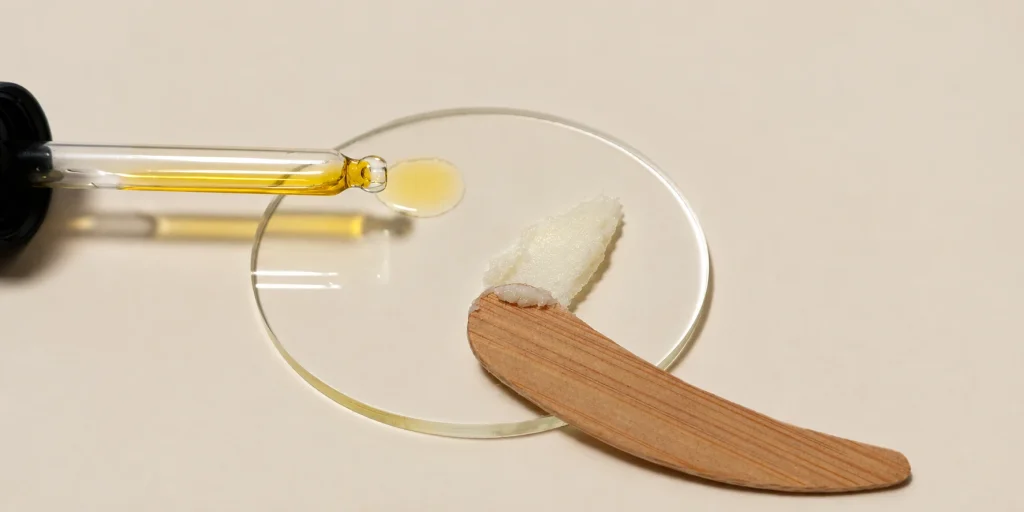
When people first transition to natural skincare, they often buy a single bottle of pure oil. Single oils are wonderful, but each one usually only solves one piece of the dry skin puzzle:
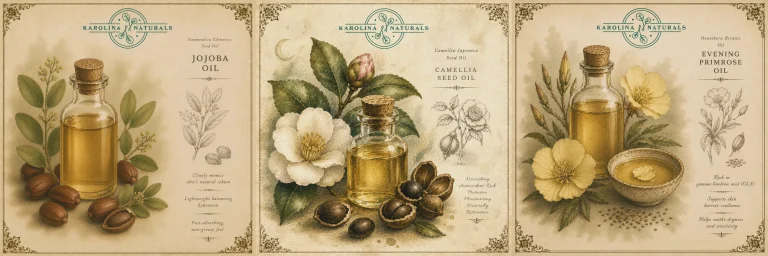
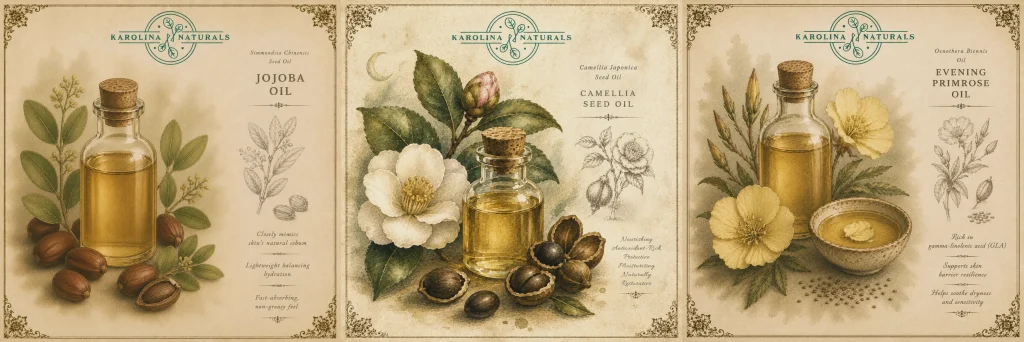
- Pure Jojoba Oil: Incredible at mimicking your skin’s natural sebum to prevent clogged pores, but lacks deep Omega fatty acids needed for intense barrier repair.
- Pure Sea Buckthorn Oil: A brilliant antioxidant powerhouse rich in Vitamin C, but shouldn’t be used undiluted, as it can leave an orange tint on skin, and feel heavy.
- Pure Evening Primrose Oil: Packed with Gamma-Linolenic Acid (GLA) to soothe redness, but absorbs slowly on its own and lacks lightweight spreadability.
- Pure Rosehip or Camellia Oil: Highly hydrating, but doesn’t offer long-lasting occlusive protection against harsh winds or central heating.
- Olive squalane: A lightweight, fast-absorbing oil that deeply hydrates the skin, locks in moisture, and mimics your skin’s natural oils, although it lacks the diverse fatty acids, vitamins, and minerals found in unrefined plant oils.
Using a single oil is like eating just one nutrient for dinner – it helps, but your skin thrives on a complete diet.
As with any new product – remember to patch test first!
Plant Oils to Use With Caution on a Damaged Skin Barrier
Research suggests that the fatty-acid composition of an oil matters when considering its effect on the skin barrier. Oils with a higher proportion of linoleic acid relative to oleic acid may have better barrier-supporting potential, while oils that are particularly rich in oleic acid may disrupt the stratum corneum when applied repeatedly to inflamed or already-damaged skin. (Read the full study here)
Examples of relatively high-oleic oils to use with caution on a compromised skin barrier include:
- Olive oil
- Avocado oil
- Sweet almond oil
- Macadamia oil
- Marula
However, this doesn’t mean that these oils are universally “bad for the skin.” Research indicates that healthy, non-inflamed skin may tolerate high-oleic oils without the same barrier-disrupting effects. The frequency and duration of use also appear to matter.
Research notes that continuous application of high-oleic oils can induce mild irritation or water loss in reactive or inflamed skin.
The Power of Synergy: Why 12 Oils Are Better Than One
Instead of relying on a single ingredient, true skin transformation happens through botanical synergy.
When formulating our Karolina Naturals Renewal Facial Oil, I combined 12 cold-pressed, unrefined plant oils in precise ratios. Each oil plays a distinct role, allowing lightweight oils to carry deep-nourishing lipids into the skin without leaving a greasy residue.
Here is what happens under the surface when these 12 botanical oils work together:
| Carrier Oil | Specific Benefit for Dry & Dehydrated Skin |
|---|---|
| 1. Jojoba Seed Oil | Closely mimics human sebum to carry nutrients deep without clogging pores. |
| 2. Camellia Seed Oil | Rich in both Oleic and Linoleic acids & Vitamin A to restore silky softness and skin elasticity. |
| 3. Baobab Seed Oil | African oil packed with Omegas 3, 6 & 9 to deeply repair dry lipid barriers. |
| 4. Olive Squalane | Recreates skin’s natural moisture shield, locking in hydration for 24 hours. |
| 5. Evening Primrose Oil | High in Gamma-Linolenic Acid (Omega 6) to calm redness and soothe flaky patches. |
| 6. Pumpkin Seed Oil | High in zinc and fatty acids to plump fine lines and support skin structure. |
| 7. Blackcurrant Seed Oil | Rich in omega-6 and omega-3 fatty acids to reduce redness, inflammation and strengthen fragile, environmentally stressed skin. |
| 8. Sweet Almond Oil | Deeply soothing emollient, used in a small amount, that softens rough, tight skin textures. |
| 9. Sea Buckthorn Oil | Antioxidant powerhouse packed with Omega 7 & Vitamin C for a radiant glow, improve uneven tone and post-blemish marks. |
| 10. Carrot Seed Oil | Rich in beta-carotene to protect against environmental damage and revitalize dullness. |
| 11. Vitamin E Oil | Natural antioxidant that boosts skin healing and preserves oil freshness. |
| 12. Sunflower Seed Oil | High in linoleic acid to maintain skin barrier integrity and prevent water loss. |
By blending all 12 oils, your skin receives deep moisture, barrier repair, antioxidant protection, and soothing comfort in every single drop.
Choosing Your Ideal Renewal Facial Oil Variant
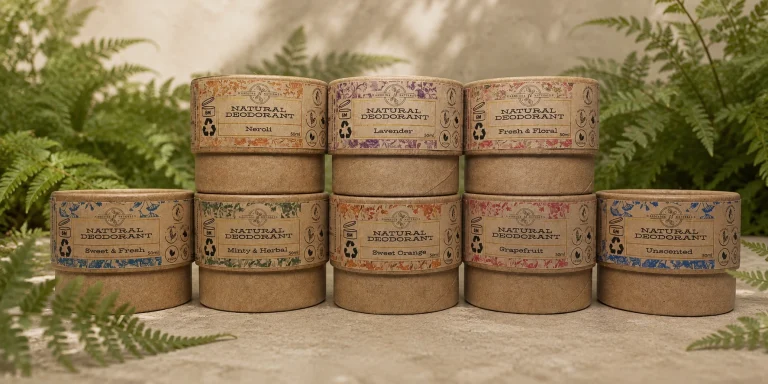
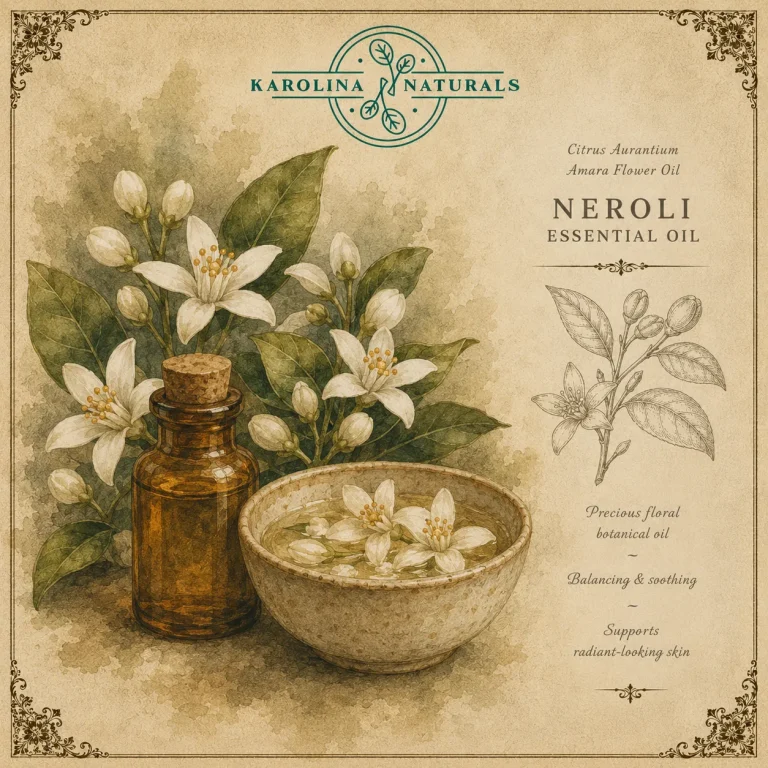
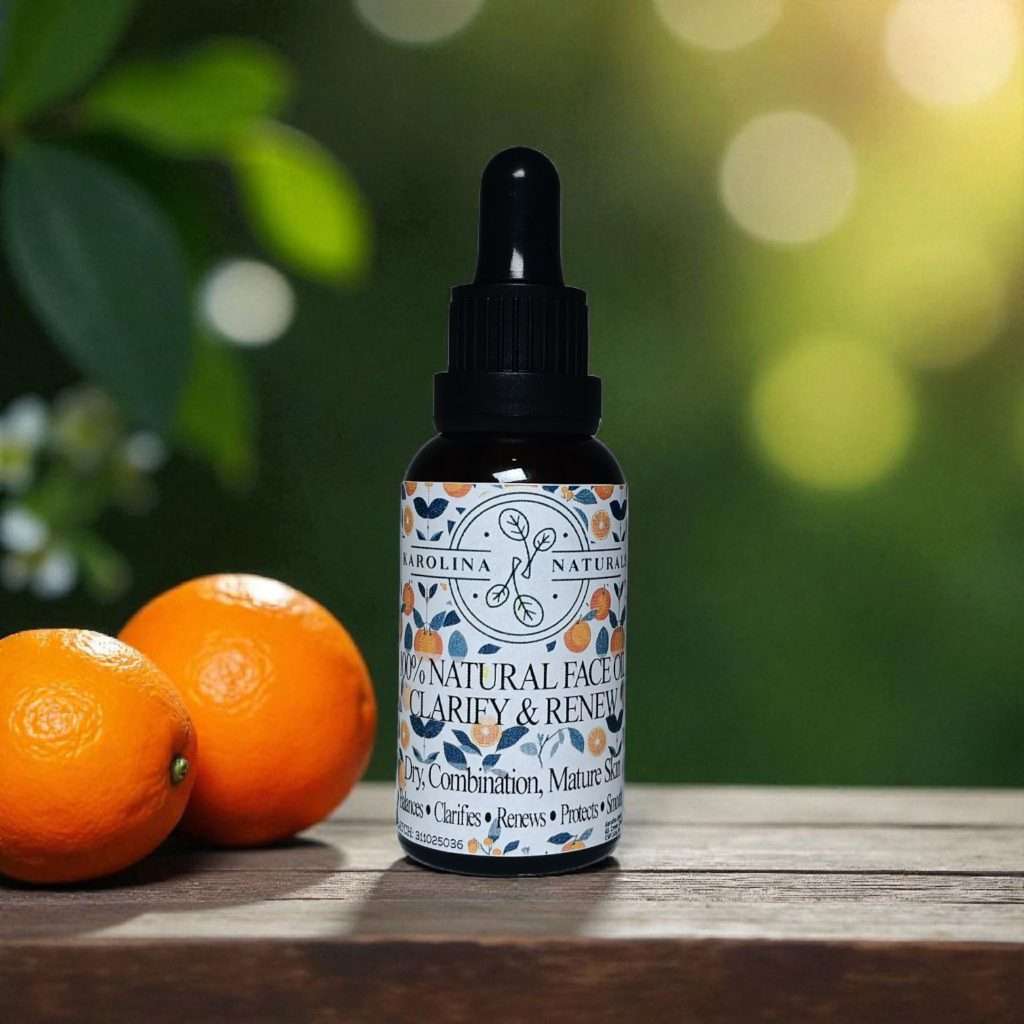
To make your daily routine a pleasure for the senses, I infused this 12-oil powerhouse base into five elegant variants.If your skin barrier is damaged, I recommend choosing the unscented variant first. As your skin barrier recovers, you can explore any other scent.
Once you know your skin is getting full 12-oil protection, simply choose the scent and therapeutic vibe that fits your day:
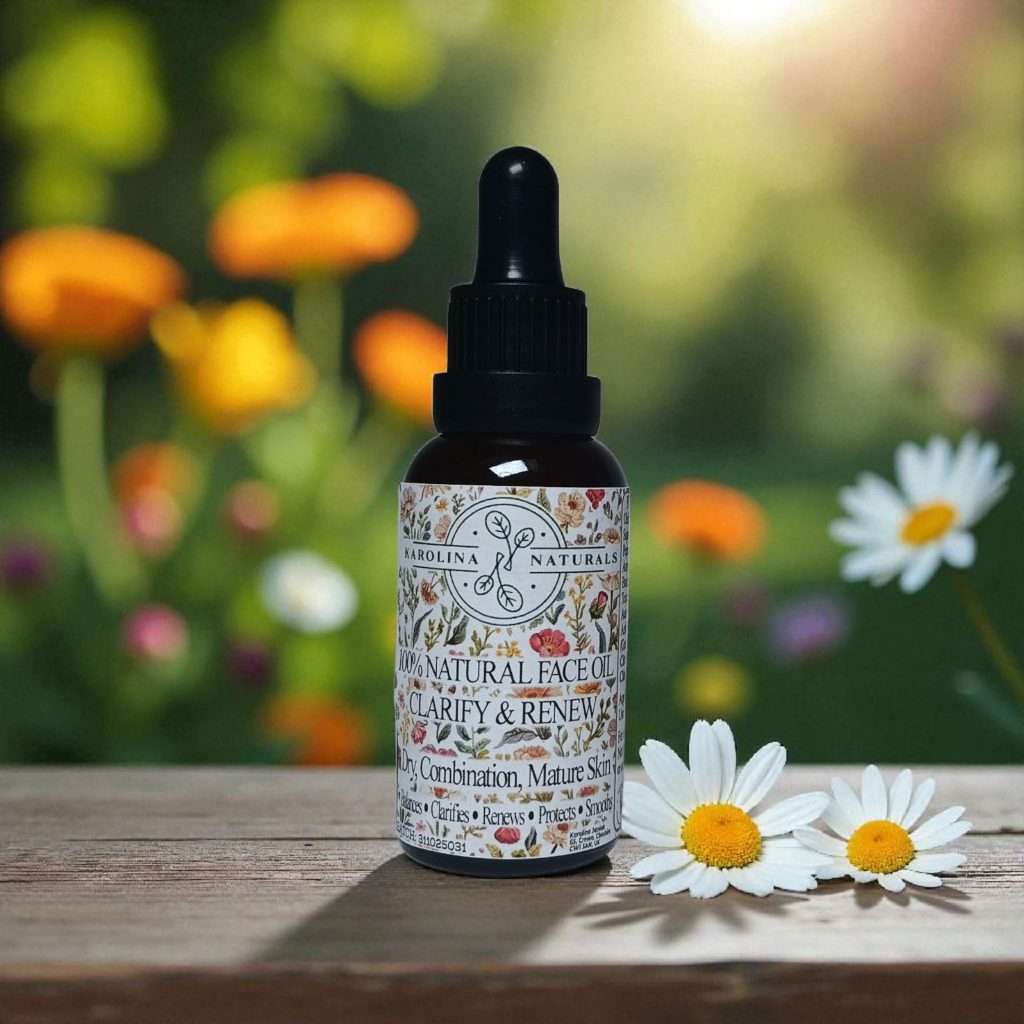
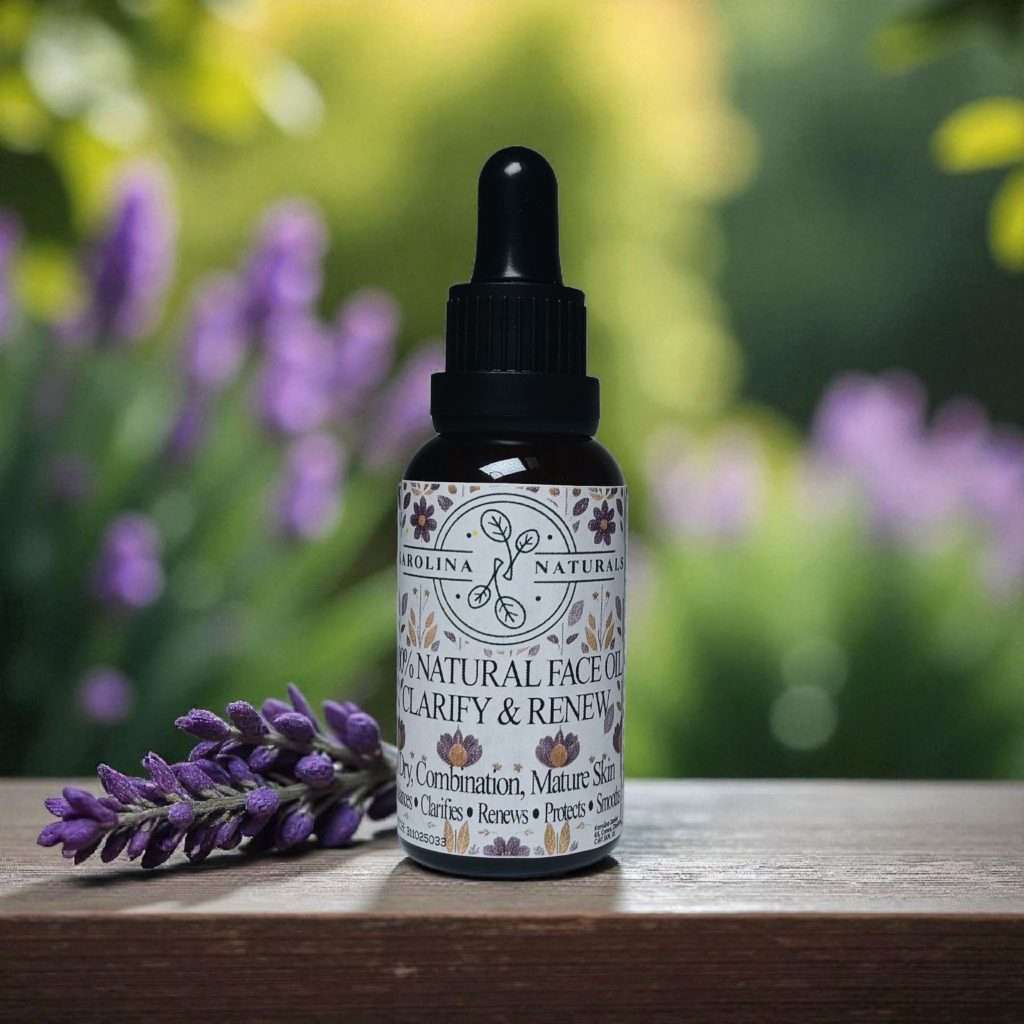
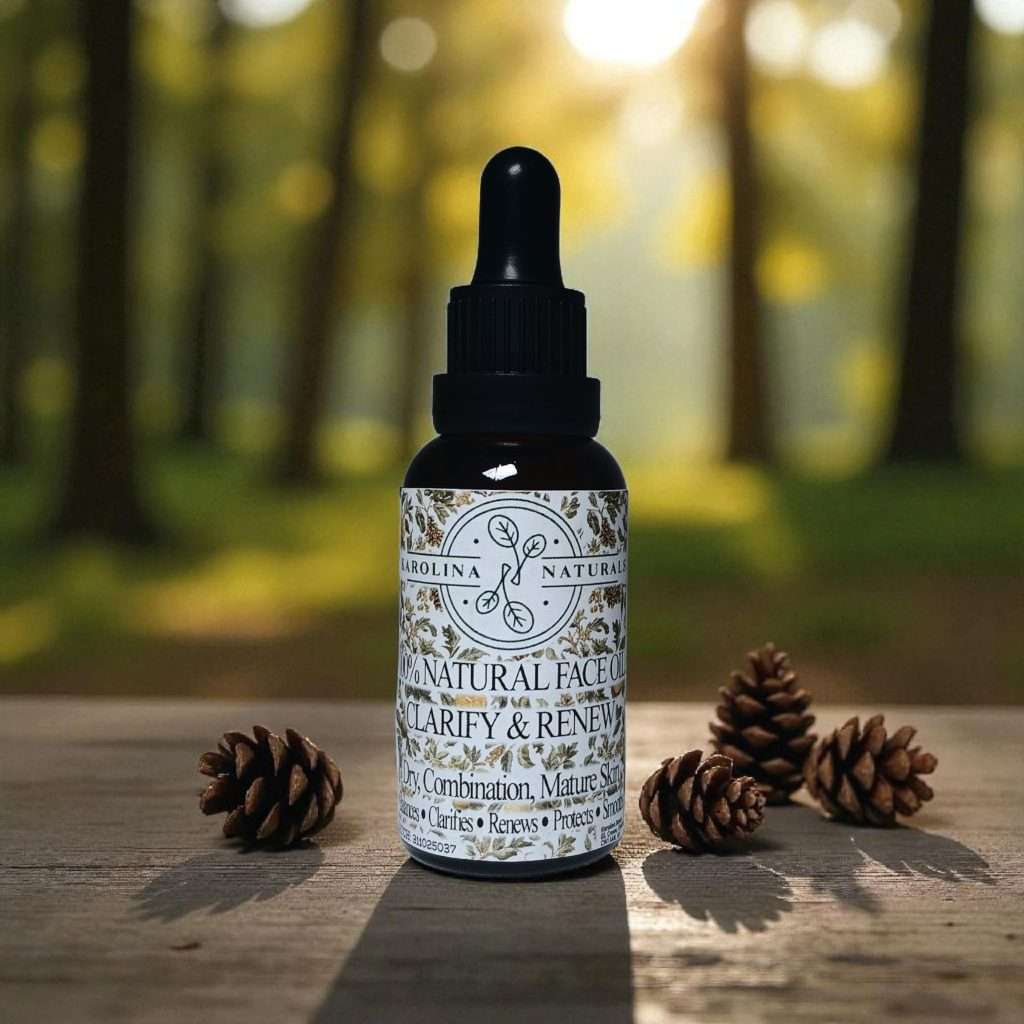
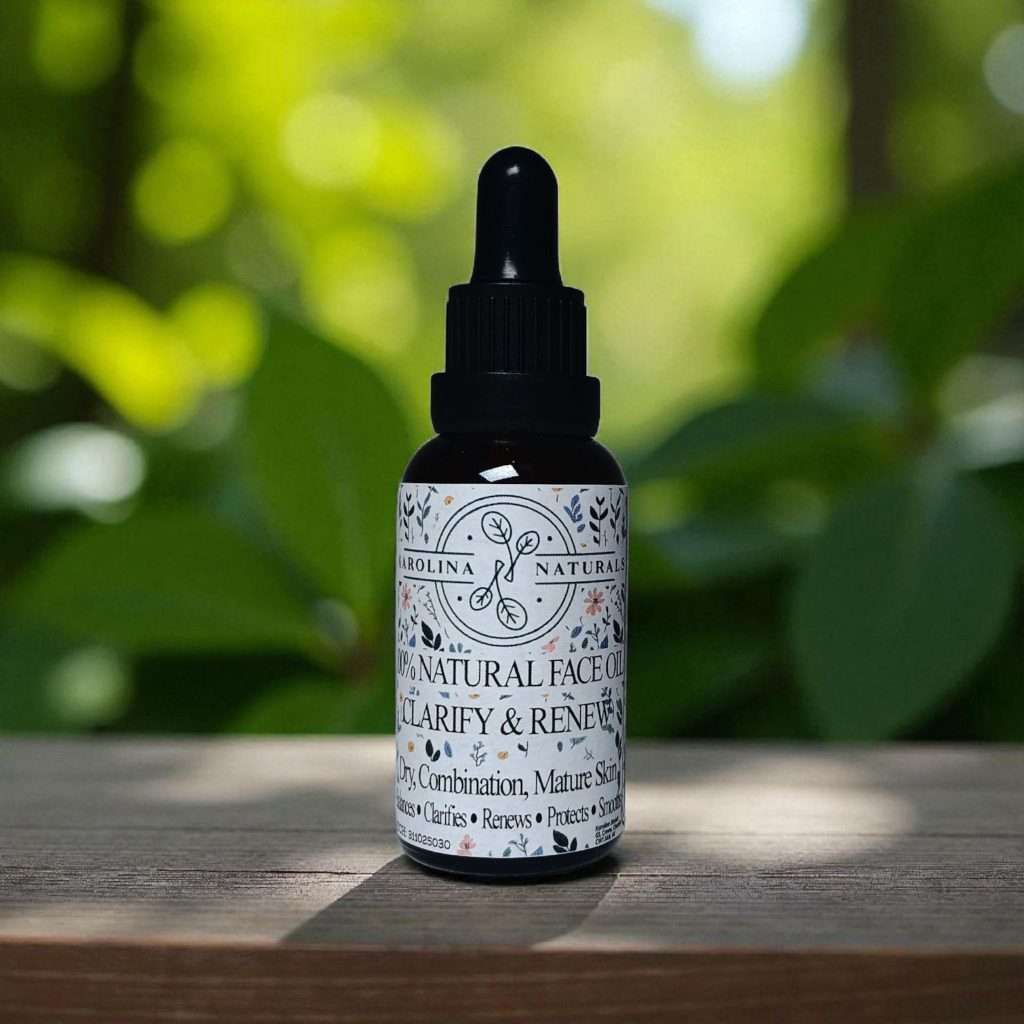
Zero-Waste Refill Tip: All Karolina Naturals facial oils come in recyclable glass bottles. When reordering, choose our plastic-free
Aluminium Cap option so you can reuse your glass dropper pipette again and again!
Step 1 for Dry Skin: Cleanse Without Stripping
Using a 12-oil facial oil won’t fix dry skin if your cleansing step strips away your natural oils every morning and evening. Foaming cleansers destroy your lipid barrier before your routine even starts!
If you have dry or sensitive skin, washing it in the morning with lukewarm water may be enough, then use cleansing balm in the evening. For the time of repairing your skin barrier limit the use of exfoliation to prevent further irritation and damage.
Always pair your face oil with a gentle, oil-based cleanser like our Gentle Cleansing Balm:
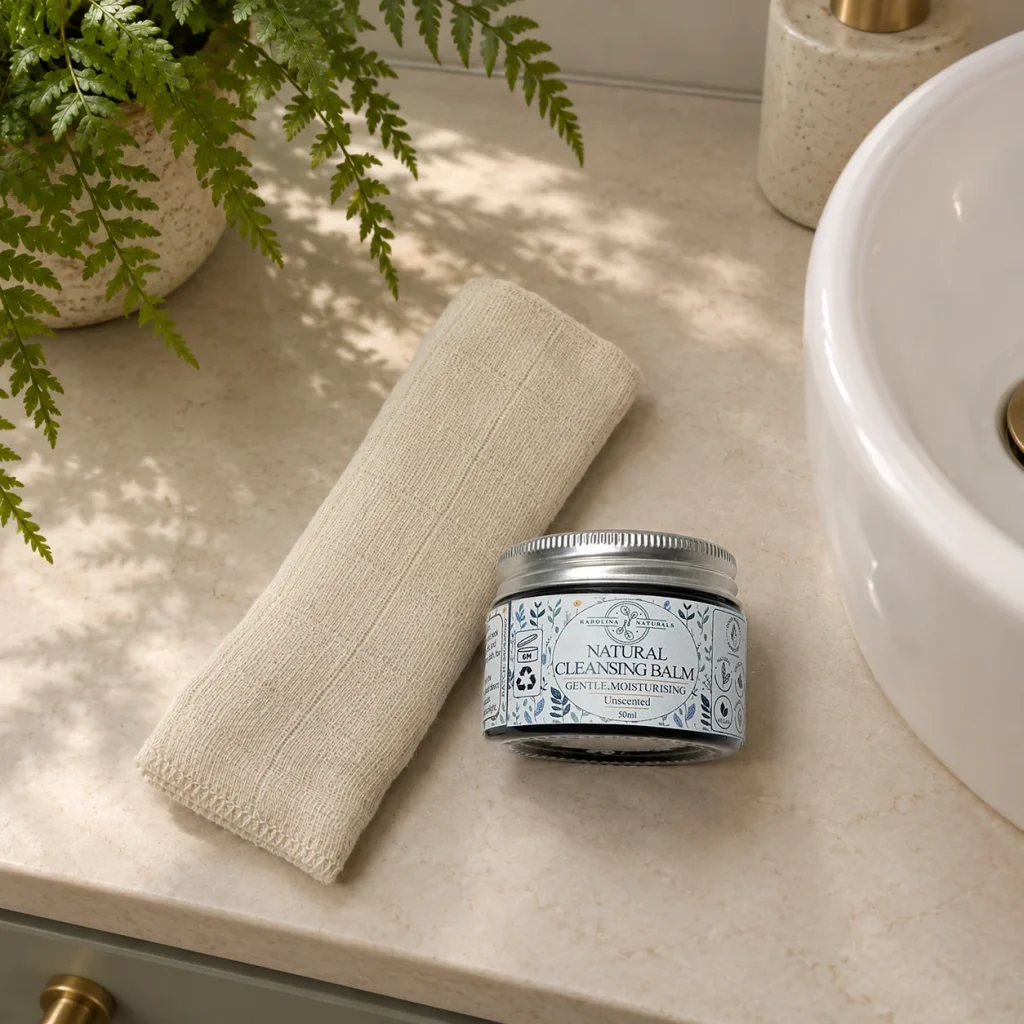
- How it works: It melts away makeup, SPF, and impurities while nourishing the skin barrier with plant waxes and oils.
- How to use: Massage onto dry skin, then gently wipe off with a warm, damp cloth. No need to rinse with water. Your face is left soft, calm, and ready to absorb your facial oil.
- What material for a face cloth should I choose: For gentle cleansing and the delicate eye area, choose a soft cotton cloth. For gentle mechanical exfoliation, a muslin cloth can provide a little more texture. Whichever cloth you choose, use a very light touch – there is no need to apply much pressure for effective exfoliation, and the eye area should always be treated particularly gently.
The Complete Ritual: Build Your Custom Face Bundle
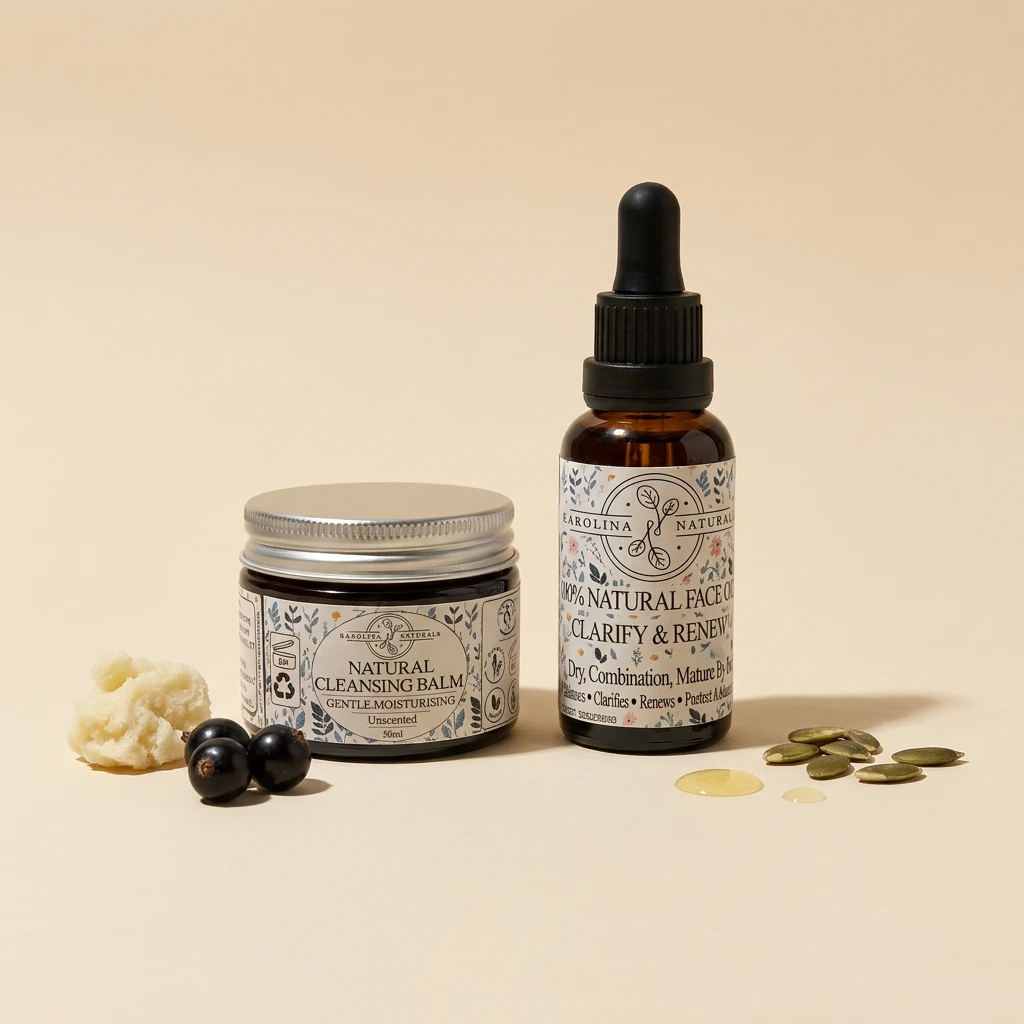
With our Karolina Naturals Skin Barrier Support Bundle, you can select your favorite Gentle Cleansing Balm and Renewal Facial Oil variant to create a complete, 100% natural, zero-waste routine – and save 18% or more!
Build Your Custom Skin Barrier Support Ritual & Save 18% here
Ready to Restore Your Skin Barrier? (+ 10% Off and a free competition entry)
Feel free to join our free monthly competition to win a natural skincare, by joining to our newsletter below!
Sign up for the Karolina Naturals newsletter to receive 10% off your first order, free tracked UK delivery on orders over £30, and entry into our monthly competition to win natural skincare products!
Frequently Asked Questions (FAQ)
Is a facial oil blend really better for dry skin than a single pure oil?
Yes! Single oils like Jojoba or Rosehip offer specific benefits, but dry skin requires a combination of lightweight absorption, deep fatty acids (Omegas 3, 6, and 9), antioxidants, and protective occlusives. A 12-oil blend combines these properties so your skin receives multi-layered barrier repair in one easy step.
Will applying 12 botanical oils clog my pores or cause breakouts?
No. All 12 carrier oils in our Renewal Facial Oil are non-comedogenic and formulated to mimic your skin’s natural sebum. Instead of sitting heavily on the surface, the blend absorbs quickly to rebalance your skin’s natural lipid levels.
How many drops of Renewal Facial Oil should I use for dry skin?
Warm 2 to 4 drops between your palms and press gently into clean, slightly damp skin, or after a water based cream (I’m working on an amazing face cream, hopefully it’ll be available soon!). Applying oil to damp skin helps lock in surface water while delivering deep lipid nourishment.
Are Karolina Naturals facial oils suitable for sensitive skin?
Absolutey. Our formulas are free from parabens, sulfates, silicones, and synthetic fragrance. For sensitive or reactive skin, we recommend our Unscented Renewal Facial Oil, which contains the full 12-oil nutrient blend without any essential oils.
Will using more oil heal my skin barrier faster?
No. Using more oil won’t speed up healing and may clog your pores. 2–3 drops may be enough – simply watch how much your skin absorbs and aim for a light, comfortable layer.
When it comes to a damaged skin barrier, less is often more.