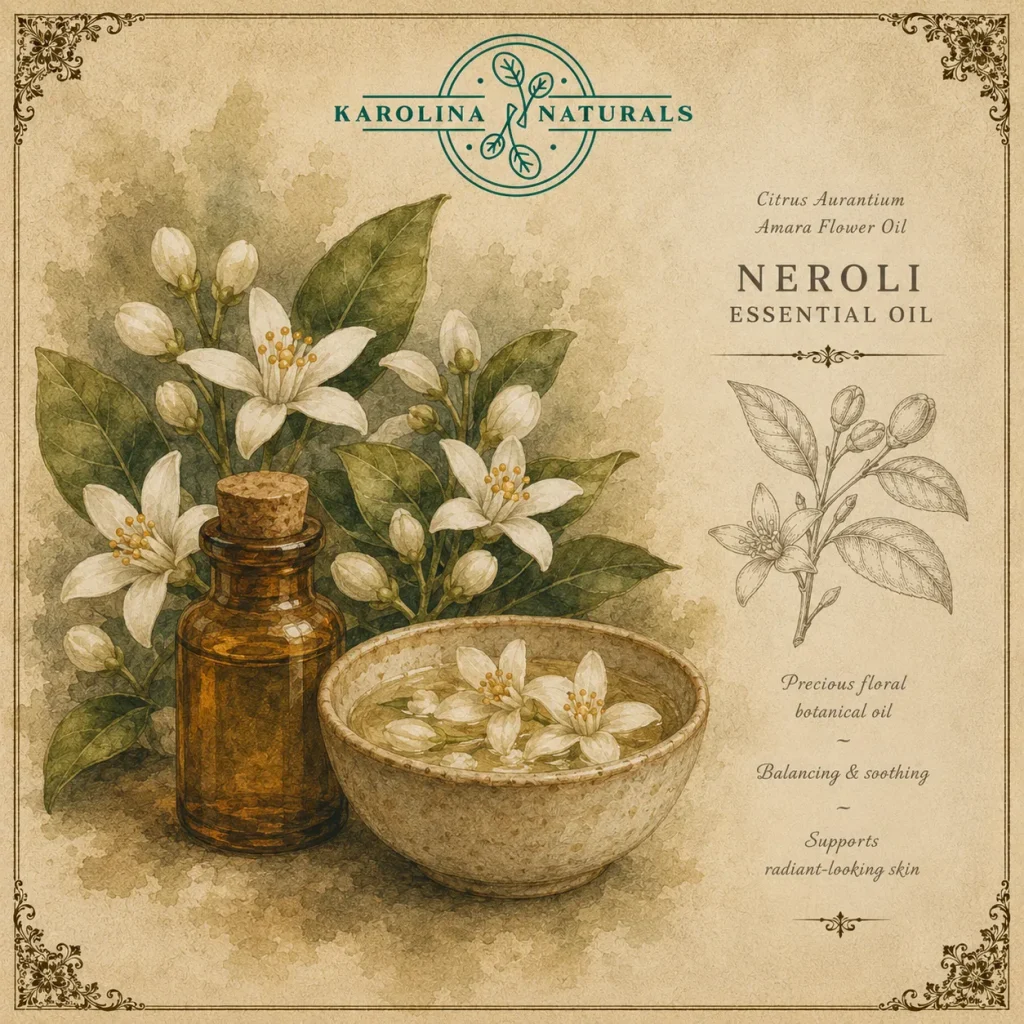
Neroli Essential Oil is delicate, ethereal, and arguably one of the most precious extracts in the entire world of aromatherapy. At Karolina Naturals, I’ve always been captivated by how the Bitter Orange tree (Citrus aurantium) can offer such a diverse range of gifts. In this guide, I’ll share why I love working with this oil and how you can bring its floral magic into your own life.
Table of Contents
The Story of a Princess: A Brief History
Did you know that Neroli gets its name from a 17th-century Italian princess? Anne Marie Orsini, the Princess of Nerola, was the one who popularized the oil by using it to perfume her bathwater and her gloves. Before she made it famous, orange blossoms were already a symbol of purity and innocence, often worn by brides in their hair. To this day, the scent is synonymous with luxury and timeless elegance.
Neroli vs Orange Blossom Water vs Petitgrain vs Bitter Orange Oil
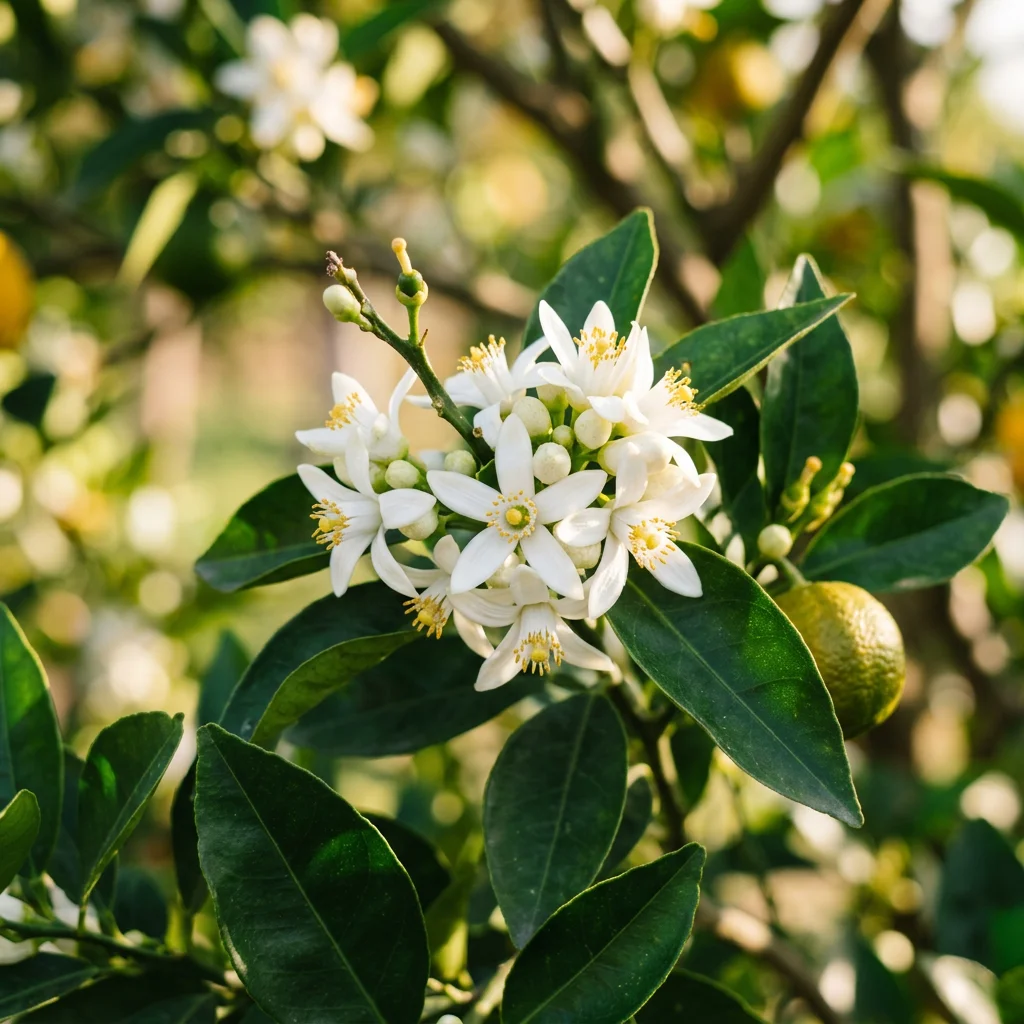
It can be confusing! All of these come from the same tree, but they are very different:
- Neroli Essential Oil: Steam-distilled specifically from the freshly picked white blossoms.
- Orange Blossom Water (Hydrosol): The fragrant water left over after the steam distillation of the flowers. It’s much gentler and wonderful as a toner.
- Petitgrain: Distilled from the leaves and green twigs of the tree. It has a much more woody, herbaceous, slightly spicy scent.
- Bitter Orange Oil: Cold-pressed from the outer peel of the fruit. It smells exactly like the fruit itself – zesty and bright.
Why Is Neroli Oil So Precious?
When you hold a bottle of Neroli Essential Oil, you’re holding the result of an incredible amount of labor. It takes roughly one ton (1,000 kg) of hand-picked blossoms to produce just one kilogram of pure essential oil. Because the flowers are so delicate, they must be picked by hand just as they open to ensure the highest oil quality.
What Does Neroli Smell Like?
It is often described as smelling like orange blossom with hints of sweet honey, bright citrus peel, soft green notes, and a light, airy freshness. Unlike heavier floral oils such as rose or jasmine, neroli feels uplifting, delicate, and elegant.
It’s worth noting that neroli can smell quite different from one brand to another. Natural variations in the flowers, growing conditions, and production methods can create oils that are more floral, more citrusy, greener, spicier or sweeter.
The Soapery Neroli Essential Oil Blend
The Soapery’s Neroli Essential Oil Blend has a slightly different scent profile from pure neroli essential oil. It contains neroli alongside added natural fragrance ingredients derived from other floral and citrus compounds, designed to recreate and enhance the characteristic orange blossom aroma. As a result, many users find it smells fuller, sweeter, and more recognisably “neroli-like” than some pure neroli oils, while still retaining the fresh floral-citrus character that makes neroli so popular.
Pure Neroli vs Neroli Blends: The Price Difference
Pure neroli essential oil is one of the most expensive essential oils, with 10ml often costing £20–£60 or more, depending on quality and origin. In comparison, The Soapery’s Neroli Essential Oil Blend typically costs around £3–£6 per 10ml.
A higher price doesn’t always mean a better scent. I’ve tried a few oils sold as 100% pure neroli blossom oil that smelled surprisingly spicy or green rather than floral. While The Soapery’s blend isn’t pure neroli, I find its scent closer to the fresh, sweet orange blossom character that I personally associate with neroli.
Growing Bitter Orange in Your Garden

If you have a sunny, sheltered spot, you can grow your own Citrus aurantium. In the UK, it’s best grown in a large pot so you can move it into a conservatory or greenhouse during the winter.
- Sun: They need plenty of light and shelter from cold winds.
- Water: Keep the soil moist but never waterlogged.
- Harvest: You can use the fresh blossoms to make your own simple infusions or even dry the leaves (petitgrain) for an herbal bath soak.
- Winter Care: Keep the tree in a cool but frost-free area (ideally 5–10°C) with as much light as possible. Reduce watering.
The Mystical & Spiritual side of Neroli
Many people see neroli as a high-vibration oil that supports emotional healing, inner peace, and self-love. Aromatherapists and energy practitioners use it during meditation, prayer, and mindfulness practices because its soft floral aroma helps calm the mind and create emotional balance.
Neroli has strong associations with heart-centred energy. People often turn to it during grief, stress, or personal transformation because it encourages feelings of compassion, self-acceptance, and emotional openness. Its gentle scent feels comforting and grounding at the same time.
In chakra work, neroli connects most strongly with the Heart Chakra, which relates to love, healing, and emotional connection. Some practitioners also link it to the Sacral Chakra, where it symbolises creativity, pleasure, and emotional flow.
Whether you follow chakra practices or simply enjoy aromatherapy, neroli works well in meditation and relaxation routines. Its uplifting yet soothing aroma helps create a peaceful space and supports moments of reflection.
Safety and Allergens Explained
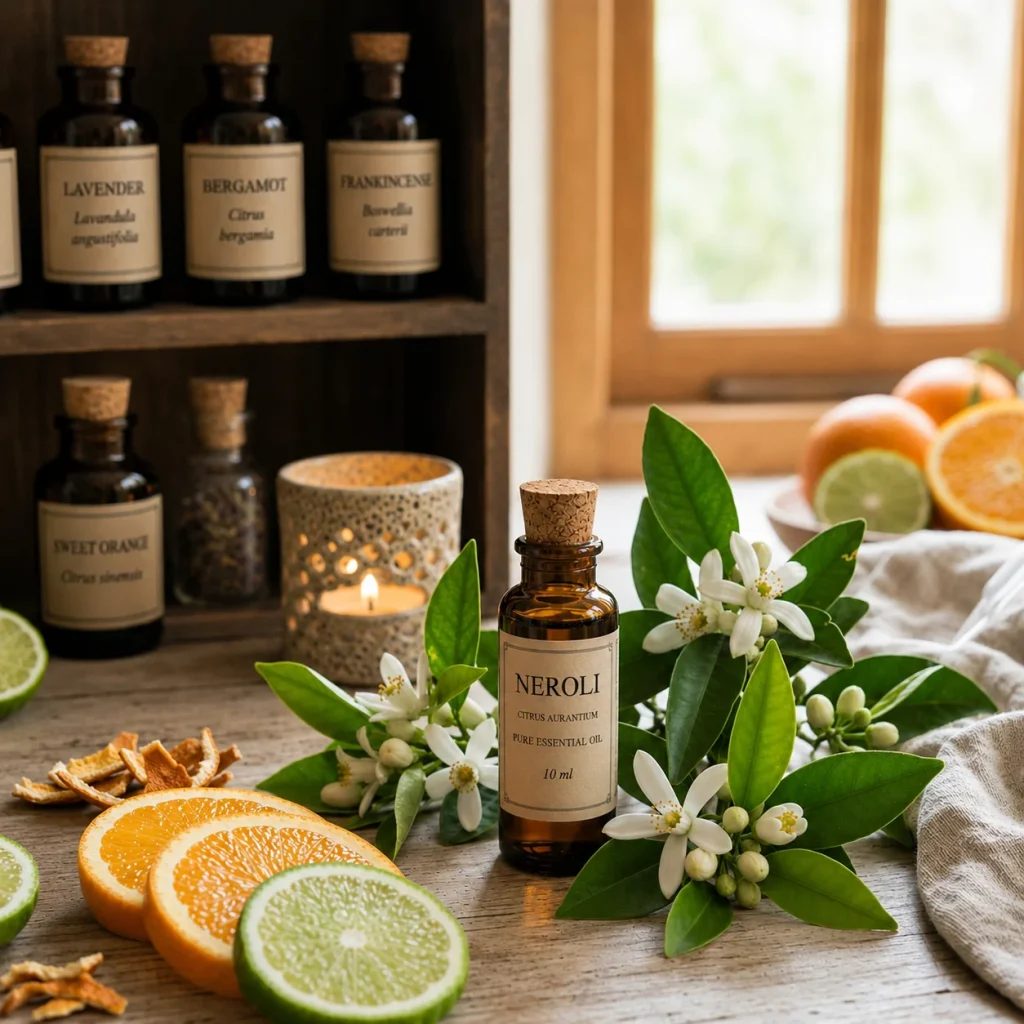
Because neroli is a citrus-derived floral, it contains several naturally occurring compounds. On my labels, you’ll see them marked with an asterisk:
- Linalool & Limonene: Common in citrus oils and known for their calming effects.
- Geraniol & Farnesol: Floral components that give neroli its distinctive ‘rose-like’ undertone.
While safe for most, always perform a patch test if you have very sensitive skin. And remember, pure essential oils should always be used within a carrier or a finished product like a balm.
What Recipes Can I Make With Neroli?
With all of these recipes, please remember to perform a patch test before using them on a larger area of skin. Also, start with a lower amount of essential oils if you have sensitive skin; you can always add more later if necessary.
1. Neroli Meditation Mist
Essential Ingredients:
30 ml Distilled Water
10-15 drops Neroli Essential Oil
30 ml Witch Hazel (or Vodka)
Step-by-Step Instructions:
- Combine the oils: Pour the neroli drops into the empty glass bottle.
- Add the dispersant: Pour in the witch hazel or vodka. This step is necessary because oil and water do not naturally mix.
- Fill with water: Top the bottle off with distilled water.
- Mix thoroughly: Screw the top on tightly and shake vigorously.
Before Meditation:
- Shake the bottle: Always shake well before each use because the oil and water will separate over time.
- Mist the air: Spray 2–3 times above your head and let the mist fall over you.
- Inhale deeply: Close your eyes and take three slow, deep breaths to focus on the floral aroma.
- Scent your space: Spritz your meditation cushion, yoga mat, or the corners of your room.
Important Safety Tips:
- Avoid your eyes: Keep your eyes tightly closed when spraying near your face.
- Test your skin: Doing a patch test on your inner arm ensures you will not have an allergic reaction.
- Keep away from pets: Some essential oils are toxic to dogs and cats, so avoid spraying it directly around them.
2. Heart Chakra Roller Blend
What You Need:
- 10ml glass roller bottle
- Carrier oil (like jojoba, fractionated coconut, or sweet almond oil)
- Neroli essential oil
- Rose Otto or Jasmine essential oil (optional, for extra floral notes)
- Bergamot or sustainably sourced Sandalwood essential oil (optional, to ground the scent)
Recipe:
- Add 4 drops of neroli to your empty roller bottle.
- Add 3 drops of bergamot and 2 drops of rose.
- Fill the rest of the bottle to the top with your carrier oil.
- Pop the roller top on and shake well to mix.
Do not exceed a total of 9 drops of essential oils. A total of 9 drops creates a 3% dilution. If you’d prefer a gentler blend, use 3–4 drops in total instead.
How to Use It:
Center of Chest: Apply the oil directly over your heart to deepen emotional healing.
Pulse Points: Roll the blend onto the inside of your wrists and the sides of your neck.
Mindful Breathing: Rub the oil onto the inside of your wrists, keep them close to your face, and take slow, deep breaths.
Intentional Use: Roll on the blend during meditation, yoga, or when stressful moments, to help release emotional tension, foster self-love, and calm the nervous system.
3. Soothing Neroli Bath Salts
Ingredients:
- Epsom salts: 500g
- Dead Sea salt or Pink Himalayan salt: 150g
- Carrier oil: 2 tablespoon (e.g., Jojoba Oil or sweet almond oil)
- Neroli essential oil: 10-15 drops
- Ylang-ylang or sustainably sourced Sandalwood oil: 3-5 drops (optional for extra depth)
- Dried flower petals: 2 tablespoon (optional; such as rose, neroli or chamomile)
Instructions:
Mix the dry ingredients: Place the Epsom salts and coarse salt in a glass or ceramic bowl.
Blend in the scent: Add the carrier oil mixed with essential oils into the salts. Stir vigorously until everything is combined and the oils are evenly distributed.
Add petals: Gently fold in your dried flowers.
Use: Add anywhere from 2 tablespoons to a 100 grams of the mixture into warm running bath water as the tub fills.
Soak: Soak for 15-60 minutes and relax.
4. Sleep Pillow Sachet
Ingredients:
- 1/4 cup of dried flowers such as chamomile, rose petals, or organic lavender. If youre lucky to have a dried neroli flowers feel free to add them!
- 3-5 drops of neroli essential oil
- Teaspoon of uncooked rice (optional)
- Breathable fabric pouch
Benefits of adding rice to a sleep sachet:
- Longer-lasting scent – Rice absorbs essential oils and releases the aroma gradually over time.
- Helps prevent moisture build-up – Rice absorbs excess moisture, and prevents the flower petals from rotting.
- Grains of rice coat evenly when shaken with oils – Direct drops on petals can over-saturate a single spot, leading to oily leaking or staining on your pillowcase.
Recipe:
- Without rice: Add your dried flowers to a small bowl and gently stir in the neroli oil.
- If using rice: Add few drops of essential oil onto the rice, mix it well, and add to the dried flowers mix.
- Fill the pouch: Transfer the scented mixture into a small muslin or cotton drawstring bag.
- Place near bed: Slide the sachet inside your pillowcase or keep it on your bedside table.
Top Sleep Blends:
Pair neroli with other relaxing scents to create custom nighttime aromatherapy:
Neroli & Cedarwood: Provides a grounding, warm atmosphere.
Neroli & Lavender: Promotes deep relaxation and sleepiness.
Neroli & Chamomile: Reduces stress and racing thoughts.
5. Calming Bath Tea with Leaves
How to Prepare a Neroli Leaf Bath:
- Make a leaf tea: Steep fresh or dried leaves in boiling water for 15 minutes.
- Strain the liquid: Remove the leaves before pouring the fragrant water into your bath.
- Use an essential oil (optional): Add 1-3 drops of neroli essential oil to a spoonful of carrier (like jojoba or coconut)
- Disperse the oil: Add the oils to the bath as the tub fills, rather than after the bath has filled, to prevent skin irritation.
6. Diffuser Blend
A diffuser blend designed to uplift the mood while supporting focus, relaxation, and emotional balance. Neroli brings a soft floral sweetness associated with love and calm, lavender promotes relaxation, and clary sage adds depth and clarity.
Ingredients:
- 12 drops neroli essential oil
- 7 drops lavender essential oil
- 5 drops clary sage essential oil (or frankincense, geranium, or bergamot)
- Optional: up to 2 drops eucalyptus or peppermint essential oil for a fresher aroma
Recipe:
- Combine all essential oils in a small dark glass bottle.
- Close the bottle and shake gently to blend.
- Add 2–6 drops of the blend to your diffuser, following the manufacturer’s instructions.
How to use:
Diffuse in a bedroom, meditation space, yoga room, or home office to create a calming and uplifting atmosphere.
Safety notes:
- Follow your diffuser manufacturer’s guidelines for water and oil quantities.
- If anyone in the room has asthma or sensitive airways, start with fewer drops and ensure good ventilation.
- For bedtime use, diffuse for 30–60 minutes before sleep rather than throughout the night.
- Most of the essential oils may not be safe for pets.
Storage:
Store the blend in a dark glass bottle away from direct sunlight and heat. For best freshness, use within 6–12 months.
7. Neroli Sugar Scrub
Ingredients:
- 200g granulated white sugar or raw sugar
- About 50g organic coconut oil (softened or melted)
- 5-10 drops neroli essential oil
- 1g vitamin E oil (optional, helps moisturize and preserve the formula)
Recipe:
- Place the sugar into a clean, medium-sized glass mixing bowl.
- Pour the softened coconut oil mixed with vitamin E oil over the sugar.
- Add 6 to 12 drops of neroli essential oil.
- Stir the ingredients thoroughly until the mixture feels like damp sand.
- Transfer the scrub to a small, airtight glass jar or container, and keep in a room temperature.
How to Use:
- Take a small handful of scrub in the shower.
- Gently massage it onto wet skin in circular motions.
- Avoid using it on sensitive facial skin.
- Rinse thoroughly with warm water and pat your skin dry.
Shop My Neroli Favorites
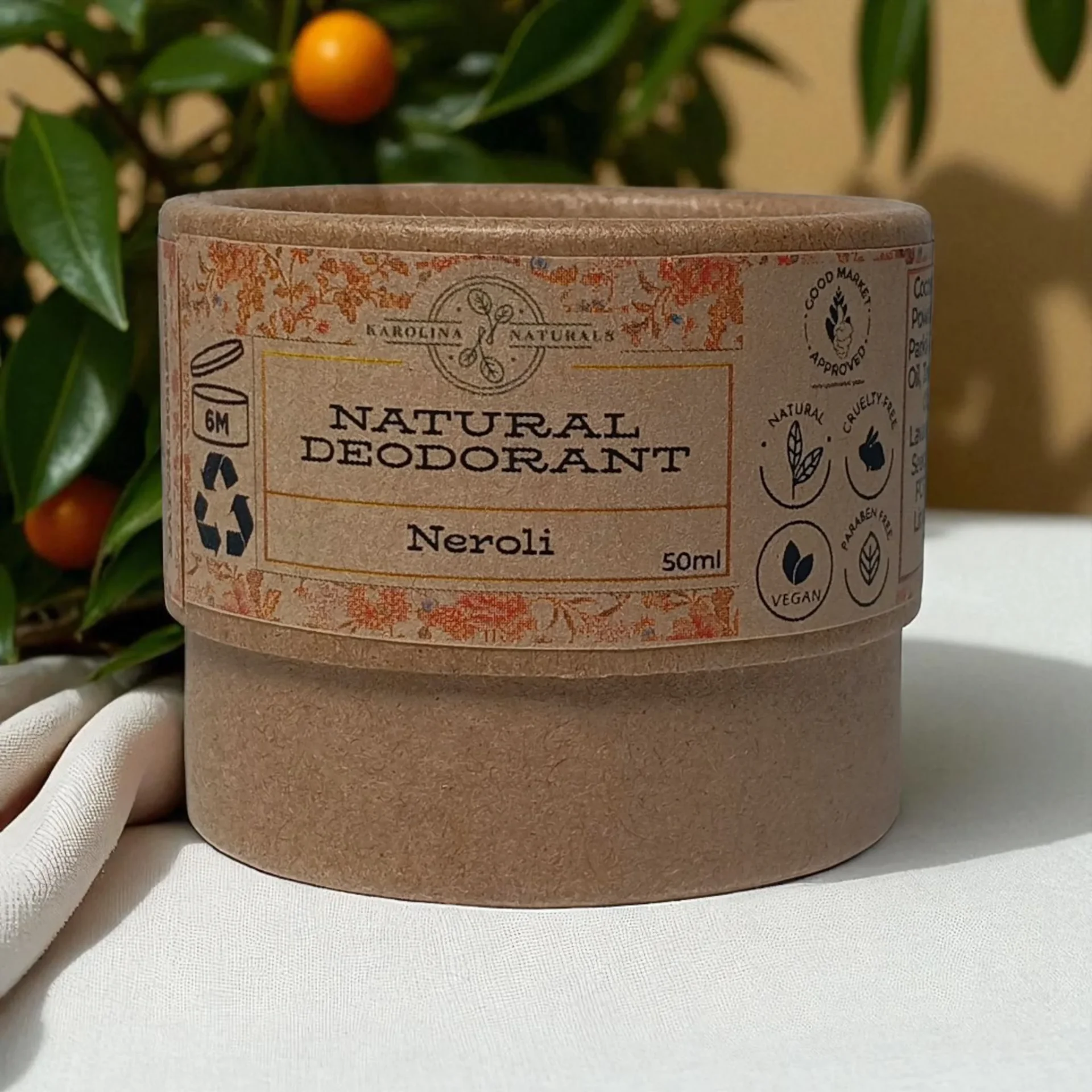
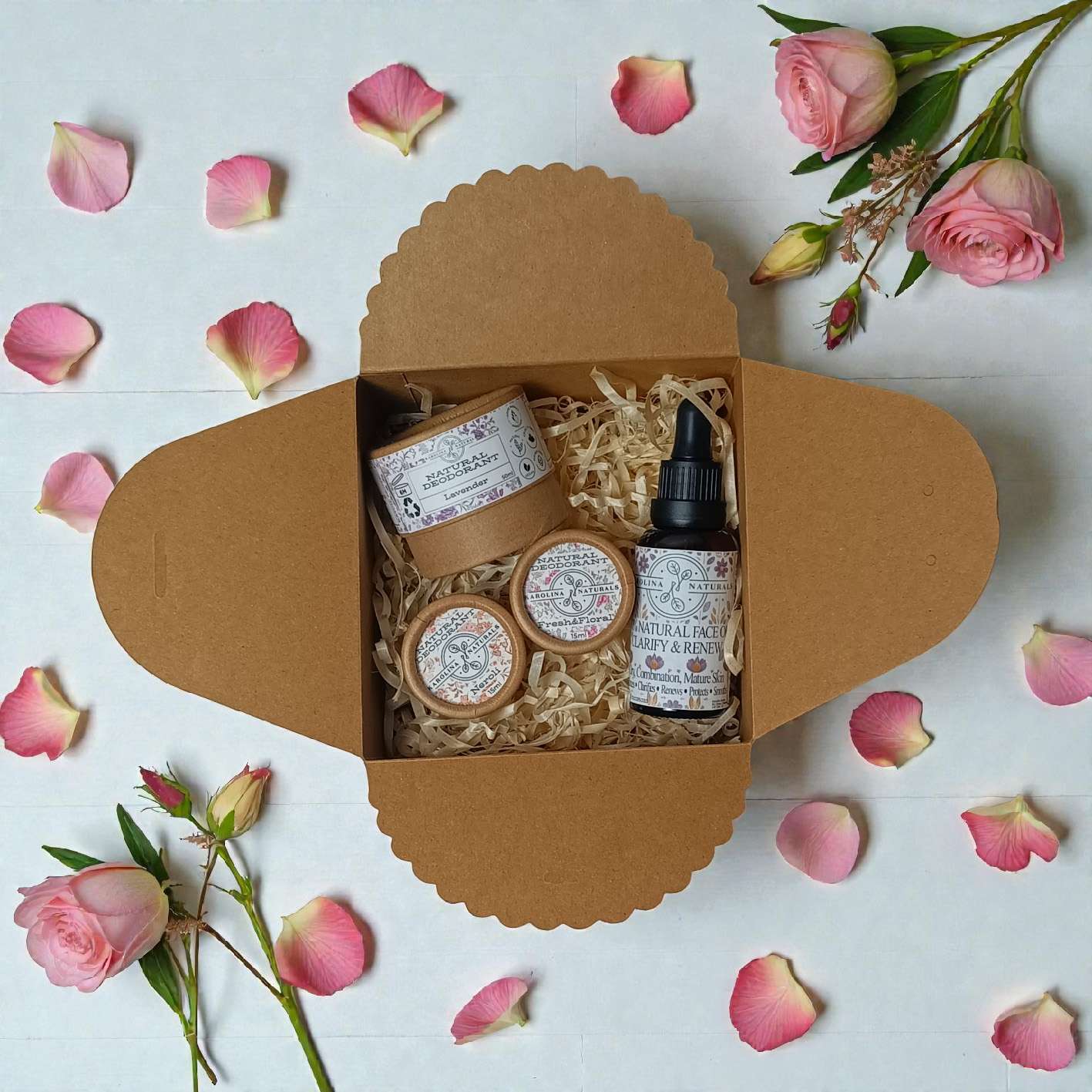
Are you looking to experience the benefits of neroli without the guesswork? Explore my Neroli Deodorants and Natural Face Oils for a perfectly balanced, zero-waste skincare routine.
Frequently Asked Questions (FAQ)
Is neroli oil photosensitive like other citrus oils?
Unlike orange or lemon peel oils, neroli is steam-distilled from flowers and is not considered phototoxic. However, I always recommend caution when wearing any citrus-heavy blend in direct, intense sunlight.
What is the best way to use Neroli at home?
A few drops in a diffuser can completely transform the energy of a room, helping to lower stress levels. You can also mix it with a little Epsom salt for a truly royal bath experience.
Is neroli safe for children?
Neroli is one of the gentler essential oils and is often used in low dilutions for children to help with sleep and calm, but always consult a professional for appropriate ratios.
What is the shelf life of Neroli oil?
If stored in a cool, dark place in an amber glass bottle, pure Neroli oil typically lasts for about 1 to 2 years. Its delicate floral notes are the first to fade, so it’s best to use it while fresh!
Can Neroli oil help with stretch marks?
Yes! Neroli is widely celebrated for its cytophylactic properties, meaning it helps to stimulate the growth of new healthy skin cells. This makes it a popular ingredient in oils and balms designed to fade stretch marks and scarring.
How does it compare to Lavender for sleep?
While Lavender is a sedative and deeply relaxing, Neroli is more of an emotional ‘harmonizer.’ It is excellent for sleep that has been disrupted by anxiety or grief, helping to quiet a racing mind.
What recipes can I make with neroli?
You can use neroli in recipes inspired by the whole bitter orange tree, from fresh orange blossom that people grow themselves to essential oil and petitgrain from the leaves and branches. You can find recipe ideas in the recipes section above in this blog post.